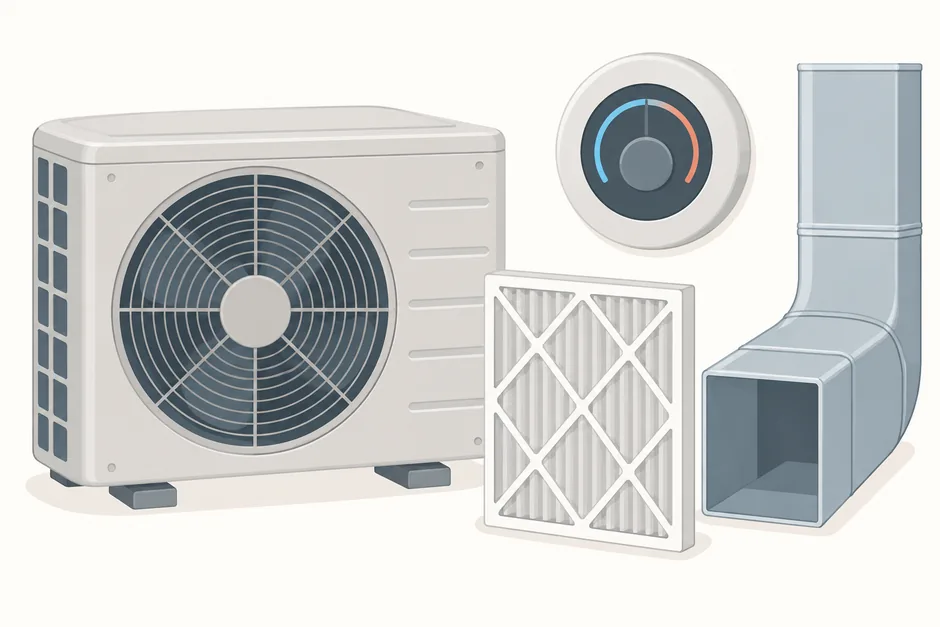
HVAC Technician prices in Kansas City, KS
| Project | Time | Typical cost | Range |
|---|---|---|---|
| Diagnostic service call (no parts) | 45–90 min | $63 | $52 – $76 |
| Annual AC or furnace tune-up | 60–90 min | $117 | $96 – $140 |
| AC repair (capacitor / contactor / minor part) | 1–3 hours | $283 | $232 – $340 |
| Refrigerant recharge (R-410A, residential) | 1–2 hours | $339 | $278 – $407 |
| Smart thermostat install | 1 hour | $252 | $206 – $302 |
| Gas furnace replacement (80% AFUE, 80k BTU) | 1 day | $2,597 | $2,130 – $3,117 |
| Heat pump replacement (3-ton, 16 SEER) | 1–2 days | $5,939 | $4,870 – $7,126 |
| Mini-split install (single zone, 12k BTU) | 1 day | $2,162 | $1,773 – $2,594 |
| Whole-home duct cleaning | 3–5 hours | $306 | $251 – $367 |
Local rate = BLS national mean × 2.4 markup × (KS COL 87.1/100). Materials adjusted by the same factor.
What a hvac technician in Kansas City actually does
A residential HVAC technician services, repairs, and installs forced-air furnaces, central AC, heat pumps, mini-splits, and ductwork. A diagnostic visit typically includes static-pressure measurement, refrigerant pressure (for cooling systems), temperature differential between supply and return, electrical-component testing (capacitor microfarad, contactor pull-in, transformer voltage), and ignition or burner inspection on heating equipment. Installations require Manual J / Manual D / Manual S calculations to size the equipment correctly — beware any installer who skips these and recommends "the same size you have now."
Questions to ask before you hire in KS
- Are you NATE-certified, and is your company licensed and insured in this state?
- For a replacement: did you run a Manual J load calculation, and can I see it in writing?
- What SEER2/HSPF2 is the equipment you're quoting, and what's the AHRI match number?
- Does the quote include duct sealing, thermostat, condensate pump (if needed), and permit?
- What's the labor warranty, and is the manufacturer warranty registered in my name?
- Will you provide commissioning data (subcooling/superheat, static pressure) at completion?
"Same-size replacement" without a load calc, refrigerant-only quotes that don't address the leak, and any installer who pushes the largest unit without explaining why.
Looking for a specific ZIP?
Seasonal hvac checklist for Kansas City homeowners
Spring
- Schedule an AC tune-up before May; pros are 30–40% cheaper in shoulder season than during the first July heatwave.
- Replace HVAC filters (every 30–90 days depending on type and pets).
- Hose down the outdoor condenser coil and clear at least 2 feet of vegetation around it.
- Test the AC by setting it to 5°F below indoor temperature; it should kick on within 30 seconds and the supply registers should blow noticeably cool air within 5 minutes.
Fall
- Schedule a furnace or heat-pump tune-up before October.
- Replace HVAC filters again going into heating season.
- Clear leaves from around the outdoor condenser/heat pump and cover the top only (never wrap the sides).
- Test CO detectors near gas-burning appliances; replace batteries.
- Run the furnace for 10 minutes before the first cold snap; address any odd smells, banging, or short-cycling now.
Winter
- Keep furniture and rugs at least 6 inches off supply registers and return-air grilles.
- Inspect attic insulation; less than R-30 is the #1 reason heating bills run high in older homes.
- Defrost outdoor heat-pump coils once every 2–3 weeks during sustained cold.